
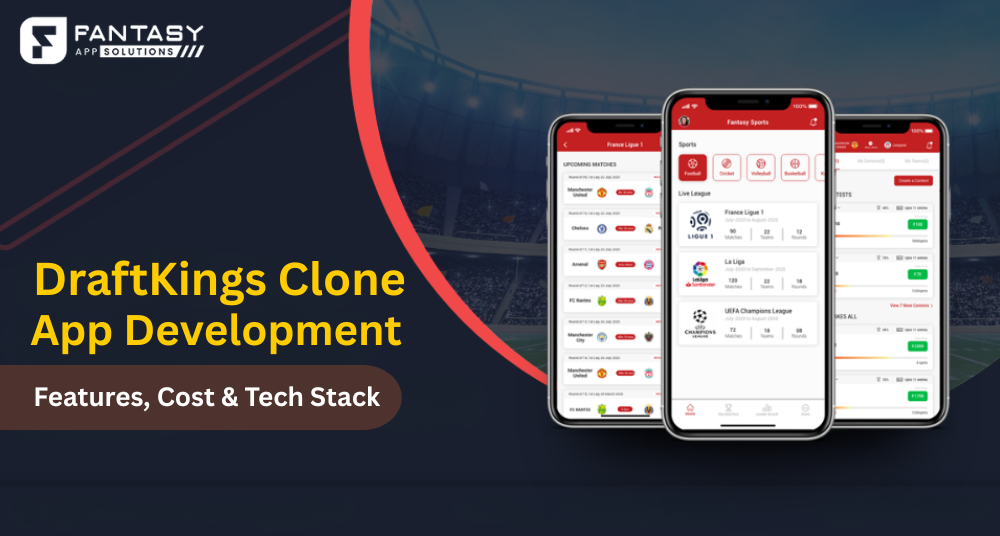

The fantasy sports and real-money gaming industry has witnessed explosive growth over the last decade. Platforms like DraftKings have successfully combined Daily Fantasy Sports (DFS), sportsbook integration, and engaging mobile experiences to dominate the market.
If you’re planning to launch a DraftKings clone app in 2026, you need more than just a similar interface. You need a scalable architecture, a real-time performance engine, a secure payment infrastructure, and a well-defined revenue strategy.
This in-depth guide explores everything you need to know—from essential features to cost estimation and the best tech stack for development.
Understanding the DraftKings Business Model
DraftKings operates primarily on a Daily Fantasy Sports (DFS) model, allowing users to:
- Join paid contests
- Create fantasy teams for single-day matches
- Win cash prizes
- Participate in tournaments and leagues
Core Revenue Model
DraftKings generates revenue through:
- Entry Fee Commission (Rake Fee)
- Sportsbook & betting integrations
- Advertising partnerships
- Promotional campaigns & sponsored contests
If you’re building a clone, defining whether you’ll focus purely on DFS or integrate betting modules is a strategic decision.
Must-Have Features in a DraftKings Clone App
To compete in this market, your platform must offer advanced features categorized into User Panel, Admin Panel, and Security System.
User Panel Features
Account & Profile
- Quick registration (Email/Social login)
- KYC verification
- Multi-factor authentication
- User wallet system
Contest Participation
- Multiple contest formats (Head-to-Head, Mega contests, Private leagues)
- Team creation with player selection
- Salary cap system
- Real-time scoring
- Leaderboards
Engagement Features
- Push notifications
- Referral & bonus system
- Promo codes
- Live chat support
Admin Panel Features
A powerful admin backend ensures operational control.
- Contest creation & management
- Commission rate settings
- User activity monitoring
- Payment approval & fraud control
- Analytics dashboard
- Risk management system
Admins should be able to control prize pools and track real-time financial data.
Security & Compliance Features
Since real money is involved, security is critical.
- End-to-end encryption
- Anti-fraud algorithms
- Payment gateway security compliance
- AML & KYC verification
- Geo-location restrictions (region-based access)
Advanced Features to Stay Competitive in 2026
To outperform competitors, consider adding:
- AI-powered team suggestions
- Advanced player analytics dashboard
- Multi-sport integration (NFL, NBA, Cricket, Soccer, etc.)
- Blockchain-based transparent prize pools
- Social gaming features
- Gamification rewards
Innovation increases user retention and engagement.
Technology Stack for DraftKings Clone App Development
Choosing the right tech stack ensures scalability, performance, and security.
Frontend Development
- Flutter (cross-platform mobile app)
- React Native
- Swift (iOS native)
- Kotlin (Android native)
Backend Development
- Node.js (high performance)
- Django (secure & scalable)
- Laravel (structured framework)
Database
- PostgreSQL (structured data)
- MongoDB (flexible data storage)
- Redis (caching for performance)
Real-Time Engine
- WebSockets
- Firebase
- Socket.IO
Cloud Infrastructure
- AWS
- Google Cloud
- Microsoft Azure
Cloud hosting ensures scalability during peak events.
Payment Integration
- Stripe
- Razorpay
- PayPal
Secure and fast payment processing is mandatory.
Development Process (Step-by-Step)
Step 1: Market Research
Identify your target audience and region.
Step 2: Define Features
Decide whether to include DFS only or sportsbook features.
Step 3: UI/UX Design
Create a modern, clean, sports-focused interface.
Step 4: Backend Architecture
Build scalable APIs and database structures.
Step 5: API Integration
Integrate live sports data feeds.
Step 6: Testing
Perform security testing, load testing, and compliance validation.
Step 7: Deployment
Launch on the App Store & Google Play.
Cost to Develop a DraftKings Clone App
The cost varies based on complexity and region.
Basic MVP Version
$15,000–$25,000
Mid-Level Custom Platform
$15,000–$50,000
Enterprise-Level Platform
$50,000–$100,000
Cost Influencing Factors
- Real-time data licensing
- UI/UX complexity
- Security layers
- Payment gateway integration
- Compliance requirements
- Server infrastructure
Ongoing costs include marketing, API subscriptions, hosting, and maintenance.
Legal & Regulatory Considerations
Fantasy sports and betting laws vary by region.
Key compliance requirements:
- Gaming license (if required)
- KYC & AML compliance
- Tax regulations
- Data privacy laws (GDPR, etc.)
- Geo-location restrictions
Consult legal experts before launching in specific markets.
Revenue Strategy for Long-Term Growth
To ensure profitability:
Primary Revenue:
- Entry fee commission
Secondary Revenue:
- Sponsored tournaments
- In-app ads
- Premium subscriptions
- Affiliate marketing
- Cross-sell sportsbook services
A hybrid monetization model maximizes revenue streams.
Marketing Strategy for DraftKings Clone
Development alone doesn’t guarantee success.
Growth Strategies:
- SEO & content marketing
- Influencer collaborations
- Social media campaigns
- Referral bonus system
- Event-based promotions
Retention tactics such as loyalty rewards and gamification improve user lifetime value.
Challenges in DraftKings Clone App Development
- Real-time data accuracy
- Regulatory risks
- High server load during peak matches
- Fraud detection management
- User acquisition cost
Strong infrastructure and marketing strategy reduce these risks.
Frequently Asked Questions
What is a DraftKings clone app?
A DraftKings clone app is a custom fantasy sports platform inspired by the features and business model of DraftKings. It allows users to create fantasy teams, join paid contests, compete in daily leagues, and win real-money prizes based on live player performance.
How much does it cost to develop a DraftKings clone app?
The development cost typically ranges from $15,000 to $100,000+, depending on the app’s complexity, real-time data integration, security layers, UI/UX design, and compliance requirements. Enterprise-level platforms with sportsbook integration require higher investment.
How long does it take to build a DraftKings-like fantasy sports app?
On average, development takes 4 to 6 months for a fully functional platform. Advanced features such as AI analytics, multi-sport support, and betting modules may extend the timeline to 6–9 months.
What are the essential features of a DraftKings clone app?
Key features include:
- User registration & KYC verification
- Secure wallet system
- Contest creation & management
- Real-time scoring engine
- Leaderboards
- Admin dashboard
- Payment gateway integration
- Referral & bonus system
These features ensure smooth gameplay and monetization capability.
Is it legal to launch a DraftKings clone app?
Fantasy sports legality depends on regional regulations. Many countries classify fantasy sports as skill-based games, but real-money contests may require gaming licenses, KYC compliance, AML policies, and tax registration. Legal consultation is strongly recommended before launch.
What technology stack is best for DraftKings clone app development?
A scalable tech stack may include:
- Frontend: Flutter or React Native
- Backend: Node.js, Django, or Laravel
- Database: PostgreSQL or MongoDB
- Cloud Infrastructure: AWS or Google Cloud
- Real-Time Engine: WebSockets
The final stack should prioritize scalability and security.
How does a DraftKings clone app generate revenue?
Revenue is generated through:
- Entry fee commission (rake fee)
- Sponsored contests
- In-app advertisements
- Premium subscriptions
- Affiliate partnerships
Conclusion
DraftKings Clone App Development requires careful planning, scalable architecture, regulatory compliance, and strong monetization strategy. By focusing on real-time performance, secure payment systems, and innovative features, you can build a competitive fantasy sports platform capable of attracting and retaining users.
With the right technology stack, legal framework, and marketing approach, launching a DFS platform similar to DraftKings can become a highly profitable digital venture in 2026.